
Admission & Aid
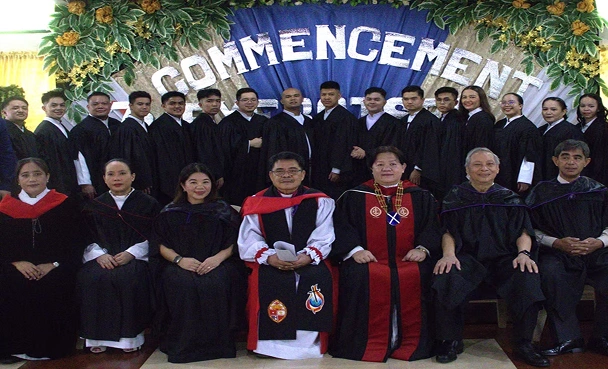
APTU is dedicated to making theological education more accessible across the Asia-Pacific region. We work with member institutions to strengthen their admissions processes, ensuring they are clear, welcoming, and supportive of students from diverse cultural and academic backgrounds. Our goal is to help schools create pathways that encourage aspiring leaders to pursue their calling with confidence.
In addition, APTU supports institutions in developing sustainable financial aid systems that reduce barriers to theological education. From scholarships and grants to sponsorship programs and partner-funded opportunities, we help member schools expand the resources available to students. By promoting affordability and equal access, we empower future ministry leaders to grow academically and spiritually without the weight of financial burden.
Application Requirements
Competence in written and spoken English is necessary. Knowledge of Greek, Hebrew, Aramaic and Latin languages is encouraged.
Applicants must submit the following documents with the completed application form:
1. Completed application form.
2. Research Proposal – 1,500–2,000 words outlining the proposed research topic..
3. Personal Statement – 700–1,000 words describing academic background, challenges to overcome, and vocational motivation.
4. Certificate of English Proficiency – Obtain an official statement from the institution that awarded the applicant’s postgraduate degree confirming the medium of study. The national consortium will rigorously evaluate the applicant’s English proficiency.
5. Two Letters of Recommendation – From former teachers or academic mentors.
6. Attested copies of all degree certificates and transcripts.
7. Curriculum Vitae (C.V.) – Including academic training, work experience, and a list of publications (articles and/or books).
8. A non-refundable application fee of USD 25
Application Timeline & Process
Application Period: November 1, 2025 – April 30, 2026
Review Process: National Consortium Senates will review applications and forward recommendations to the Inter-Regional Senate.
Notification of Results: Accepted candidates will be informed by late May 2026.
Application Process
Applicants from Asia-Pacific member countries must submit two sets of applications:
- To the Dean of APTU
- To the Dean of the respective National Consortium in their country of residence
Contact Details
Dean of APTU: [email protected]
- Philippines: Prof. Frank Hernando – [email protected]
- Indonesia: Prof. Izak Y. M. Lattu – [email protected]
- Taiwan: Prof. John Selvamani – [email protected]
- Myanmar: Prof. Dr. Lahpai Seng San – [email protected]
- The Pacific: Prof. Dr. Upolu Luma Vaai – [email protected]
If admitted, they will be assigned to work with a specific National Consortium in consultation with the student.
The Curriculum
With the assistance of the Senate, a contextually relevant curriculum will be developed and proposed to the international board for approval. The curriculum should be unique in addressing contextual theology while remaining open to various contextual concerns and issues.
Residency Requirement
Although the Ph.D. program does not require residency at a specific institution, candidates are encouraged to reside in a graduate theological institution affiliated with the Asia-Pacific Theological Union.
The integrated courses will be offered at various locations, and candidates are expected to stay at the respective sites while attending these block courses..

Graduation Requirements
Candidates must successfully complete 12 courses (each carrying 3 credits) over four semesters (two years). An Inter-Regional Colloquium focusing on methodological issues across related disciplines will be conducted during the first semester of each academic year for incoming students. This will be hosted by one of the APTU member schools.
- Four courses will be completed in the first semester.
- The remaining courses—both subject-specific and general—will be delivered in a hybrid format over the next three semesters.
Upon completion of the required coursework, candidates must pass three comprehensive examinations.
- One of these must include an online international presentation on a topic related to the candidate’s research area.
Each candidate is expected to publish at least one scholarly article in a recognized peer- reviewed journal prior to graduation.
Once the Doctoral Advisory Committee is satisfied with the candidate’s demonstrated proficiency in their field of study, it may guide the candidate in preparing and presenting a dissertation proposal for the approval of the inter-regional Senate. The proposal should include a working title, a clear statement of the hypothesis, and specific research questions to be investigated. It must also provide a concise review of existing scholarship in the chosen area, highlighting key literature, leading scholars, and
significant research findings. In addition, the proposal should outline the research methods or approaches the candidate intends to employ, along with a tentative chapter outline and a preliminary bibliography.
Once the proposal is approved, the Senate will appoint a thesis advisor. Doctoral dissertations are ordinarily expected to be 90,000 to 100,000 words in length, including notes and bibliography, and must demonstrate the standards of rigor and comprehensive scholarship appropriate to a Ph.D. degree./p>
The thesis will be evaluated by a panel of three examiners, including at least one scholar from outside the candidate’s national consortium.
The APTU Ph.D. program recognizes the importance of conducting research within the cultural context of the topic. For dissertations that focus on specific local cultural traditions, candidates may, with prior approval from the Interregional Senate, submit their dissertations in their local languages. This ensures the research engages fully with the nuances and complexities of the cultural tradition under study.
The candidate will be advised to appear for an oral defense once the dissertation committee approves the dissertation and recommends the oral defense. The national/regional board, with the assistance and approval of the Senate and the Dean, shall oversee the conduct of the defense. The primary purpose is to examine the competency and proficiency of the candidate in the area of his/her research.
Awarding the Degree
On completion of the course work, comprehensive examinations, writing of the dissertation and the successful oral defense, the Ph. D degree will be conferred by the Inter-regional Board of the Asia-Pacific Theological Union, based upon the recommendation of the Senate.
Fees Structure
Student tuition fees will be standardized across all national consortia. For the initial years, tuition is set at US$ 3,000 per year.
Additional fees include:
- US$ 25 as a non-refundable application fee
- US$ 250 for comprehensive examinations
- US$ 250 toward graduation-related expenses


Scholarship
The Asia-Pacific Interregional Board will guide deserving candidates in seeking scholarship awards from various partners.
For grants from the Foundation for Theological Education in Asia and the Pacific, applicants may apply either through theirnational consortium or through the inter-regional board. Priority will be given to faculty development initiatives, with careful attention to gender balance.